

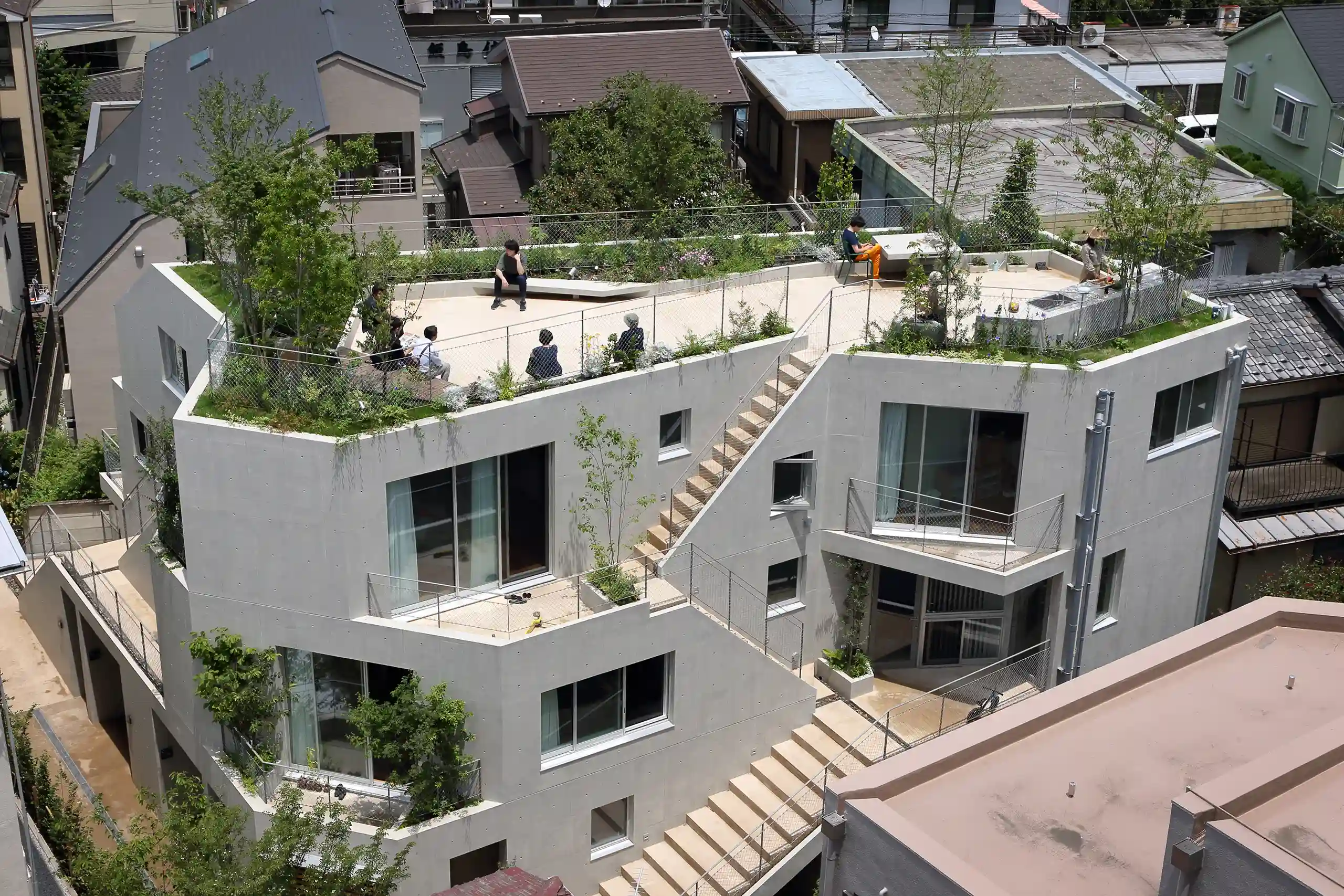
Department Overview
Architecture is the discipline that envisions future buildings and cities while inheriting the history and culture to recreates the human environment. It extends beyond the technical aspects of the design and construction of buildings to cover the social and cultural aspects that define our living environment. Those involved in architecture and cities need the ability to integrate both technologies, and artistic creativity.
Architectural students must be eager leaners to discover problems and creative imagination to solve problems in the living environment. They are expected to have an interest in a wide range of engineering technologies, liberal arts, software science, and basic academic ability in both humanities and natural sciences.
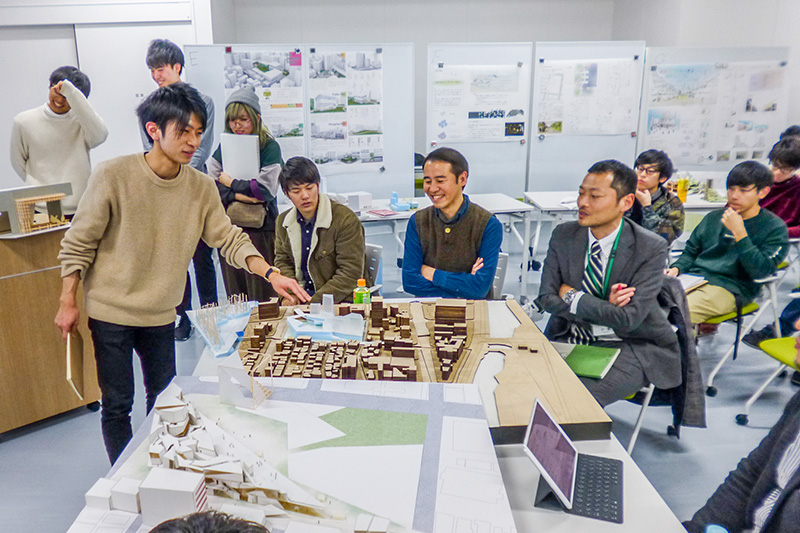
At the Department of Architecture, we train future architects to design spaces that support a wide range of human activities—from individual homes to entire cities—by combining technical expertise with conceptual and cultural understanding. Our curriculum emphasizes both theoretical and practical training, covering historical perspectives, environmental engineering for sustainable living, structural technologies for resilience against earthquakes and typhoons, and the use of materials and construction methods. We aim to foster architects and specialists capable of addressing the diverse and evolving needs of society through the creation of culturally relevant, comfortable, and energy-efficient buildings.
What Do You Learn?
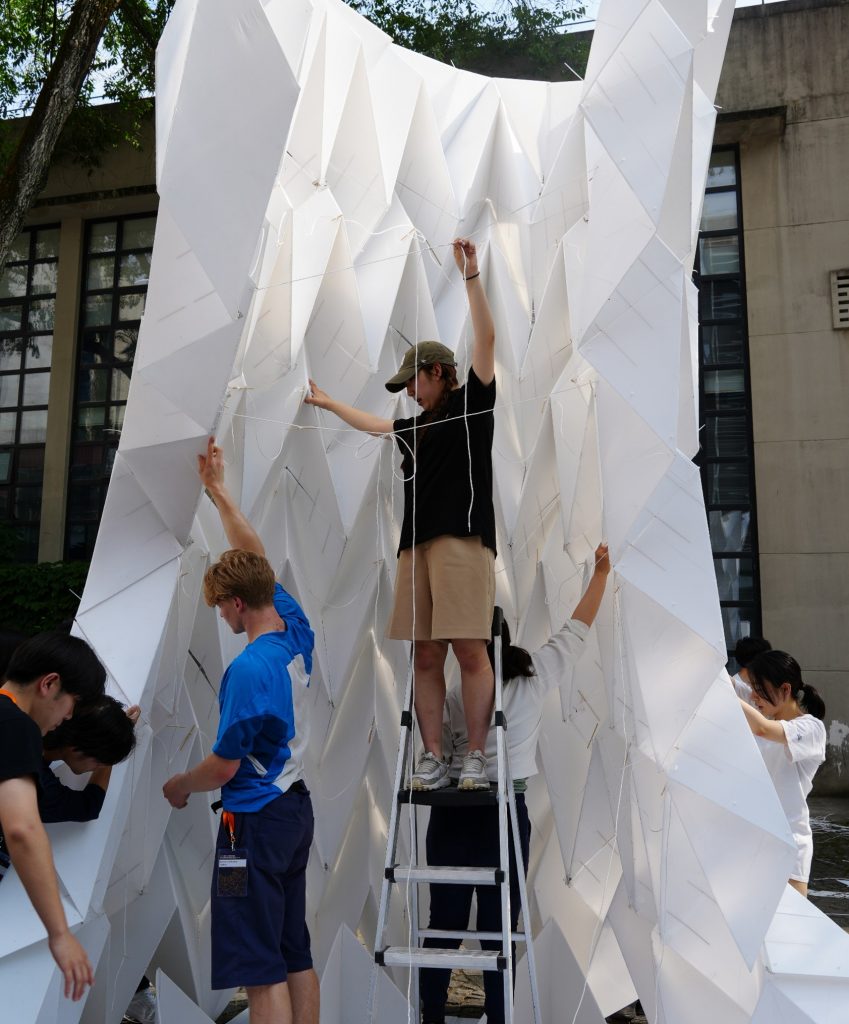
Architecture is a container that meets the various demands of human life, and at the same time, it is the environment that nurtures social activities,culture, and institutions. Therefore, architecture involves not only technology but also sociology, art, culture that defines the context of a building. Students of the department of Architecture are learning these social and technical requirements of architecture. The department of architecture is conducting courses to learn the long history of architecture that has been accumulated so far. And the design courses allow students to learn all aspects of building design by practically designing them. At the department of architecture, students can learn the skills required to plan and design architecture and cultivate artistic and creative skills through design exercises. Planning and design are not merely limited to individual structures, it encompasses entire cityscapes, which is the environment for individual and community activities. Accordingly, students are encouraged to develop an image of the future cityscapes and also learn about the urban design methods that are required to plan and create ideal and comfortable urban spaces.
The structural aspect of architectural science represents one of the most refined filed of engineering, including the application of the natural sciences. Students of architecture will learn about the structural science of buildings, including pillars, beams, and walls that support the entire building, as well as anti-stress solutions and design techniques that are applied in buildings. Architectural students learn the techniques of structural design through practical exercises. Besides, students study the characteristics of various materials used in buildings. They also learn how to use building materials optimally and how to plan the process of actual construction. Furthermore, students learn methods of buildings economically.
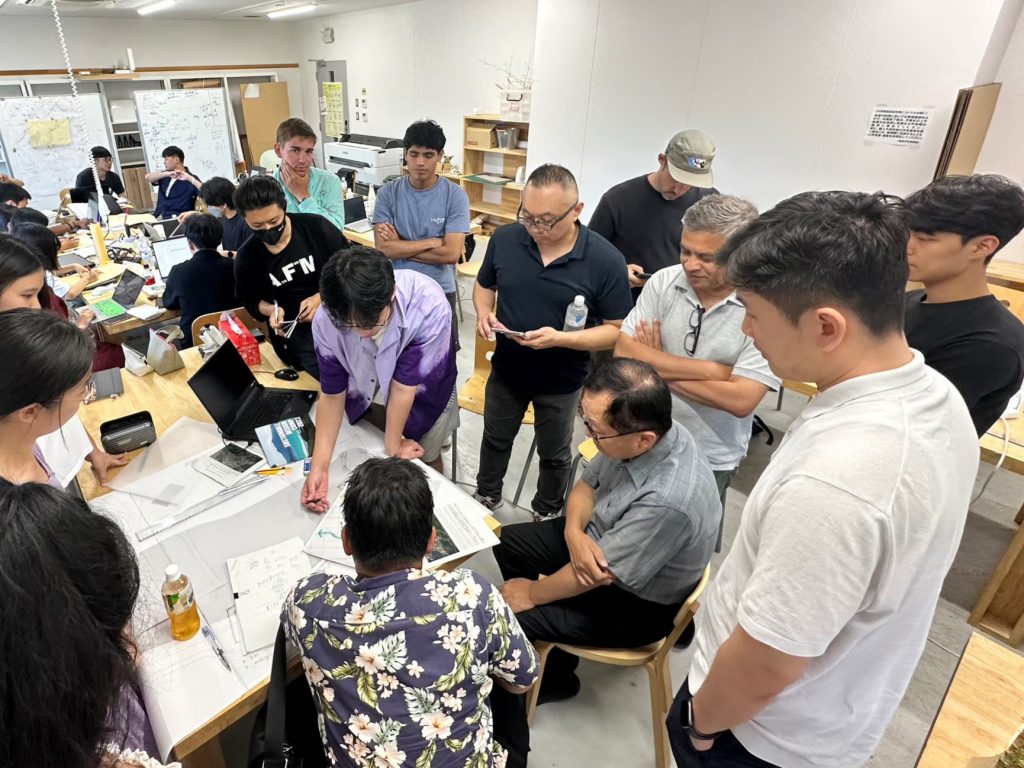
Architectural environmental science is the field that passively designs and actively controls the indoor and outdoor human environment according to the needs of the building. The architectural environment studies also include the healthy architectural environment, architectural acoustics, architectural lighting, and energy consumption in buildings. The department of architecture provides courses to learn principles of various aspects of building environment studies and also provides opportunities to learn how to use those technologies in architectural designs. The practical and analytical knowledge of the building environment is important to earn professional qualifications in architecture. Students who will join master’s courses will gain the training that is useful to work in design offices, government offices, think tanks, etc.
Urban disaster management is invaluable for architects and professionals in the built environment field. Students of the department of architecture can learn principles of the development and practical application of management methods for urban disasters. Thos who like to specialize in urban disaster management can study engineering ideas centered on diagnosis, actual measurement, and experiments of various structures, integration of various means such as disaster prediction, disaster prevention management, and crisis management of cities and buildings. Our courses are targeting earthquakes and typhoons in cities.
Urban design is the practice of designing a comfortable and safe urban environment. Students of the department of architecture have the opportunity to learn the principles of designing the future urban environment. The courses available at the department of architecture provide opportunities to acquire knowledge of theory, and technology on community planning, urban design, sustainable urban planning, sustainable urban design informatics, habitat engineering, and regional regeneration design. Specifically, the master’s program is provide training to become city planners, town planning specialists, consultants, architects, government officials.
Introduction Movie
Voices of Seniors
Department Policy
-
Educational Philosophy and Aims
The objective of the School of Engineering is to develop expert technicians and researchers to fulfill the responsibilities of engineering to society. Because of the wide-ranging effects of engineers on society, engineers not only require special knowledge in their respective fields, but also an understanding of ethics in engineering, a profound cognizance and perception of humanity, and a broad education about the environment and the role of human beings within it. To participate in international society it is necessary to realize and understand the multiplicity of cultures, and to respect other people’s beliefs and ideas. It is also important for engineers to hone communication skills in order to acquire practical and technical proficiency, and to cultivate logical thinking ability, planning skills, perseverance, leadership ability, and physical strength.
In keeping with this view of engineering’s responsibility to society as a whole, the Kyushu School of Engineering programs include both compulsory and elective courses which strive to educate our engineers to become leaders in their fields. Our students are expected to acquire the following during their four-year program:
- 1. Basic knowledge of mathematics and natural science necessary to be a technician in each area of expertise
- A desire to continue lifelong studies, and to keep pace with future changes in each area of expertise
- Management skills as a technical leader in each area of expertise
- Ability to implement science and technology while considering the effects on the economy, society, and the environment
- Ability to understand the role of technology and realize an engineer’s responsibilities to society
- Communication and presentation skills in Japanese and other languages
- Ability to comprehend and respect other people’s opinions and ideas, and to communicate own ideas and opinions
- Wide point of view to realize the multiplicity of cultures and understand and respect other people’s beliefs and ideas
- Wide knowledge of human nature and society, the global environment, and technology
- Basic physical strength necessary to act as an engineer or researcher
Engineering and technology will continue to assume an increasingly greater role in the world. It is our hope that our students will gain a wide range of knowledge and skills in becoming engineers who proudly carry the responsibility and commitment of working towards the betterment of society.