

Department Overview
The Department of Electrical Engineering and Computer Science was established to enable students to learn comprehensively about electrical engineering and computer science, with the aim of developing capable human resources who will lead the way for science and technology in the 21st century. Why don’t you join us at the forefront of research and development as you learn about a variety of advanced and dream-inspiring technologies? These include information and communications technology that enables use of the internet, data science that analyzes real world data, artificial intelligence and robot control technologies that support human life, very-large-scale integrated circuits used in semiconductor chips, and super-conductive technology with zero electrical resistance.
What Do You Learn?
Computer and information processing technologies
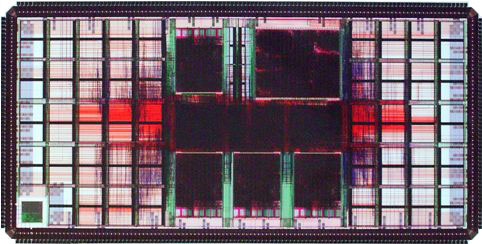
At the Department of Electrical Engineering and Computer Science, we are engaged in education and research into the basic technologies relating to computers, including hardware, software, and internet technologies, as well as security theories. Computer hardware technologies continue to make great advances, including the development of a System-on-a-Chip (SoC), where multiple functions are incorporated into one small chip. These technologies enable computer technologies to be made even smaller and to be constructed to specific computer system application requirements. These kinds of technology have tremendous potential to transform our daily lives and society at large. At the same time, the recent advances in artificial intelligence, machine learning, and data science have quickly changed the world in this decade. Educational big data visualizes the learning situations of students and helps teachers to reform their teaching methods and improve student learning performance.
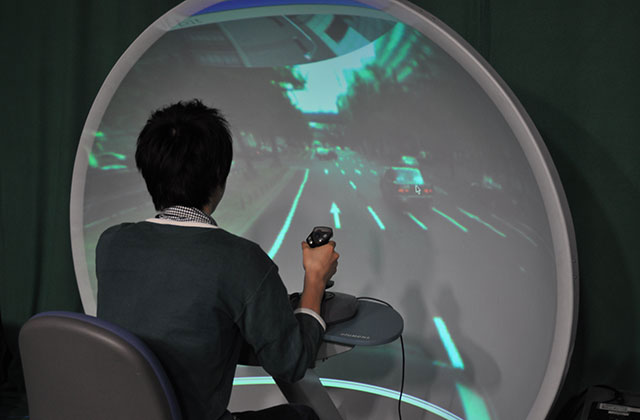
Information collected from IoT sensors installed in various locations and on moving objects and from SNS helps to recognize people’s behavior and to create timely and appropriate new services such as beating the traffic jams and guiding tourists. Furthermore, integration and advancement in both hardware and software technologies are expected to play a key role in the development of autonomous driving cars and drones.
Electronic technologies
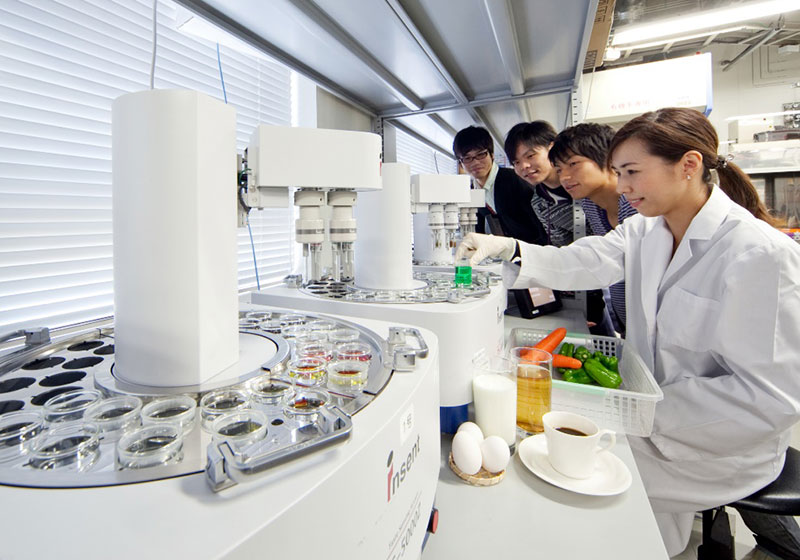
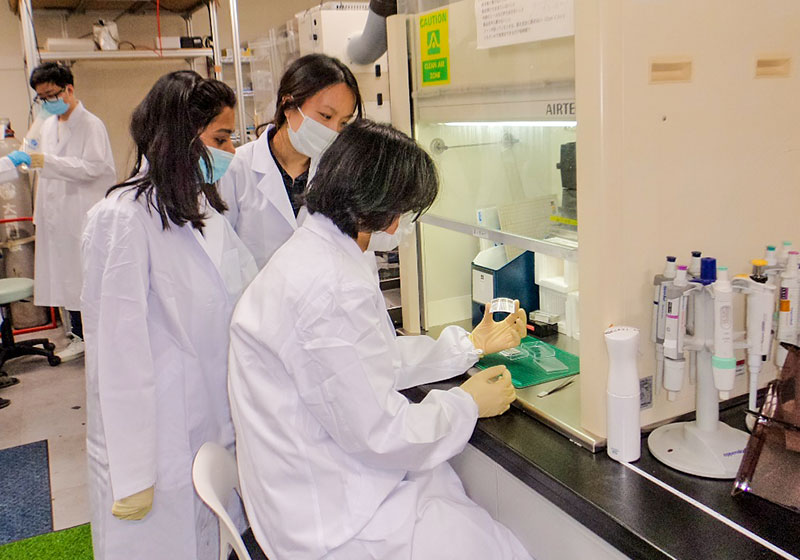
The Department of Electrical Engineering and Computer Science plays a central role in the development of cutting-edge electronic technologies. We are involved in the development of semiconductor devices utilizing integrated technologies, integrated devices using fiber optics and microwaves, and intelligent devices that possess capabilities that outperform humans. We also play a leading role in education and research on sensors, with our taste sensor that measures “flavor” being a particular example of technology that is at the global forefront of developmental technology. We are also making efforts to research and develop technologies to reduce switching supply for power and for solar batteries. In addition, we are engaged in research into optical electronics focusing on lasers within the “micro world” of atoms and electrons, as well as applications for plasma using electrically charged gases. All these research activities are closely linked to the development of information and communication technology, Society 5.0, high-performance computers, new measurement technologies, and new materials.
Power and energy technologies
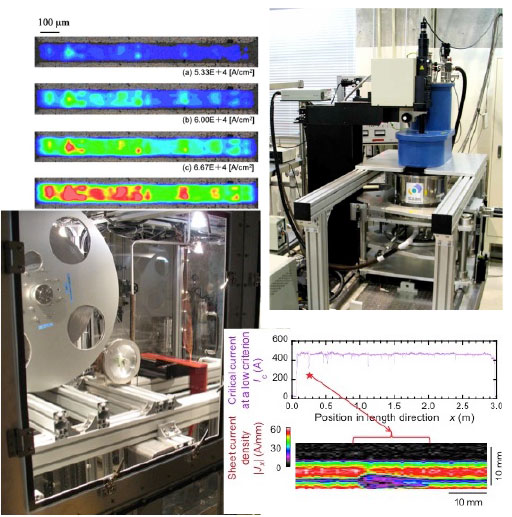
The Department of Electrical Engineering and Computer Science also covers electrical and electronic engineering such as electromagnetic theory and circuit theory through practical application to electrical machines, power converters, and large integrated systems. In the field of power and energy technologies, using super-conductivity it is possible for large-volume electric currents, 100 times greater than with copper wire to be conducted, with almost no concern about a loss of conductivity. By sending an electric current through a super-conductive coil and closing the circuit it becomes possible to achieve a permanent current and store energy. Methods of energy storage using super-conductivity are far more efficient than any other methods of energy storage, and also have the advantage of being able to store and release energy quickly. Such power storage technologies are expected to become key technologies for the effective use of renewable energies, thereby leading to reduced CO2 emissions. They can also be expected to improve the quality and reliability of power and power-related systems, for example enabling the prevention of momentary voltage reductions to a degree of 1/100th of a second in the event of a lightning strike, etc. Furthermore, superconductivity is becoming an enabling technology for the more efficient turbo-electric aircraft of the future.
Introduction Movie
Voices of Seniors
Department Policy
-
Educational Philosophy and Aims
The objective of the School of Engineering is to develop expert technicians and researchers to fulfill the responsibilities of engineering to society. Because of the wide-ranging effects of engineers on society, engineers not only require special knowledge in their respective fields, but also an understanding of ethics in engineering, a profound cognizance and perception of humanity, and a broad education about the environment and the role of human beings within it. To participate in international society it is necessary to realize and understand the multiplicity of cultures, and to respect other people’s beliefs and ideas. It is also important for engineers to hone communication skills in order to acquire practical and technical proficiency, and to cultivate logical thinking ability, planning skills, perseverance, leadership ability, and physical strength.
In keeping with this view of engineering’s responsibility to society as a whole, the Kyushu School of Engineering programs include both compulsory and elective courses which strive to educate our engineers to become leaders in their fields. Our students are expected to acquire the following during their four-year program:
- Basic knowledge of mathematics and natural science necessary to be a technician in each area of expertise
- A desire to continue lifelong studies, and to keep pace with future changes in each area of expertise
- Management skills as a technical leader in each area of expertise
- Ability to implement science and technology while considering the effects on the economy, society, and the environment
- Ability to understand the role of technology and realize an engineer’s responsibilities to society
- Communication and presentation skills in Japanese and other languages
- Ability to comprehend and respect other people’s opinions and ideas, and to communicate own ideas and opinions
- Wide point of view to realize the multiplicity of cultures and understand and respect other people’s beliefs and ideas
- Wide knowledge of human nature and society, the global environment, and technology
- Basic physical strength necessary to act as an engineer or researcher
Engineering and technology will continue to assume an increasingly greater role in the world. It is our hope that our students will gain a wide range of knowledge and skills in becoming engineers who proudly carry the responsibility and commitment of working towards the betterment of society.