
Department Overview
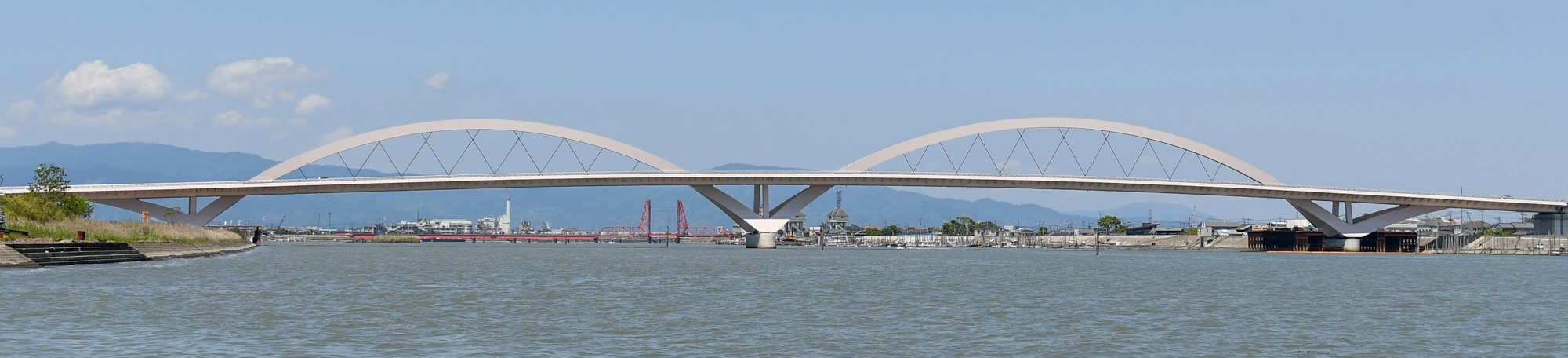
By imparting education on environmental issues and natural disasters from global scale to regional and urban levels, designing, constructing, maintaining and managing the infrastructural facilities, and through state-of-the-art research activities, our department aims to nurture researchers and engineers, who possess creativity and flexibility, which are essential elements for realizing a safe, secure and sustainable society.
Educational Aims
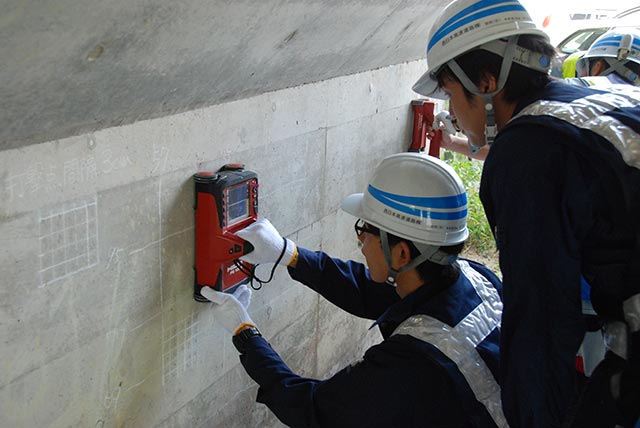
Civil Engineering is a broad discipline that aims for building safe, secure and affluent living in a sustainable way, by maintaining and preserving the foundations of nation’s land and infrastructures. Civil Engineering involves wide varieties of academic disciplines. They include, development of technology for disaster prevention against frequent natural disasters, environmental technology aiming at maintaining harmony between planned cities and nature or ecosystem, next-generation transportation system utilizing advanced information technology, technology for preserving the longevity of infrastructural facilities, etc.
Our department has been working tirelessly to achieve technical capabilities and flexibilities in research, accumulated through high degree of specialized knowledge, to realize a safe and secure society, preserve the richness of nature, and achieve sustainable social environment. In order to systematically train researchers and engineers, who can actively take the leadership role in the society, we have set the following educational goals
Master’s program
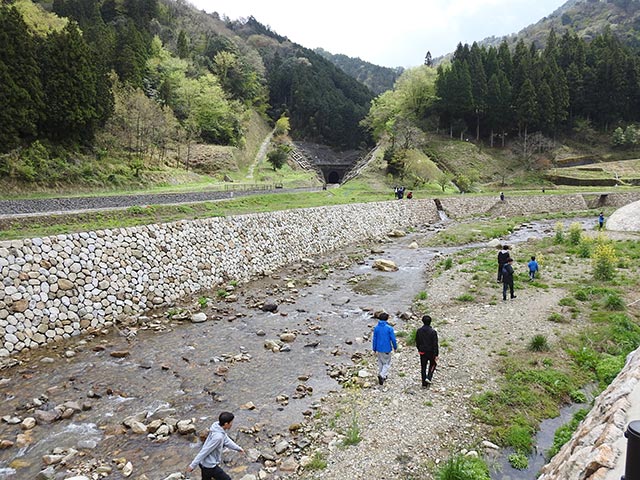
- To acquire basic knowledge and sufficient specialized knowledge in the fields of environmental issues and natural disasters from global scale to regional and urban levels, as well as the design, construction and maintenance of infrastructural facilities.
- Personality development with a sense of responsibility and ethics, who can demonstrate leadership in building a safe and secure society.
Doctor’s program
- To acquire basic knowledge and sufficient specialized knowledge in the fields of environmental issues and natural disasters from global scale to regional and urban levels, as well as the design, construction and maintenance of infrastructural facilities, and develop ability to become competitive in the international arena.
- Personality development through the knowledge and technology acquired coupled with the sense of responsibility and ethics, for demonstrating leadership ability towards building a society, which is safe, secure, and where natural environment and human environment exist in harmony.
Admission Policy
Master’s program
- Civil Engineering is an academic discipline that aims to build wide-ranging and advanced technologies for the creation of urban environmental systems. This discipline covers broad subject areas such as, design, construction and maintenance of infrastructures, reconstruction of social infrastructure system against severe natural disasters, elucidation of phenomena related to environmental problems and their countermeasures, harmony between city and natural environment.
- Acquire the basic scientific knowledge related to Structural Engineering, Mechanics of construction materials, Geotechnical Engineering, Urban planning, Fluid mechanics and Environmental Engineering.
- Acquire a certain level of education and ethics necessary for researchers and engineers
- Possess willingness and independent thinking to actively pursue learning
- Acquire the necessary language skills required to deal with international community
Doctor’s program
In addition to the above attitudes and qualities required for those who wish to enter the master’s program, we positively evaluate and accept students, who have the attitudes and qualities to explore issues independently and promote research activities.
Education and Research Fields
Department of Civil Engineering
Structural and Earthquake Engineering
Structural Design and Construction Materials Engineering
Geotechnics
Urban, Land Use and Transport Studies
Water and resource cycle systems
Sustainable Aquatic Environmental Engineering
Educational Philosophy and Aims
-
1. Educational Objectives of Kyushu University
The Kyushu University Educational Charter abides by the following principles: “The Principle of Humanity”, “The Principle of Social Responsibility”, “The Principle of Global Citizenship”, and “The Principle of the Advancement of Knowledge”. Through the education of individuals capable of leadership in a diverse range of fields in Japan and willing to assume an active role in the world, especially in Asia, Kyushu University aims at contributing to progress throughout the world.
-
2. Educational Objectives of the Graduate School of Engineering
Given Kyushu University’s position as a foremost graduate university, the central aim the Graduate School of Engineering is to be a leader in the advancement of industrial technology in Japan. We endeavor to provide an education framework which nurtures talented individuals who possess outstanding professional and comprehensive abilities to assist the continuous development of human beings. To achieve this goal, in adherence to the Kyushu University Educational Charter, the Graduate School emphasizes research and problem-solving skills, and develops creative-thinking ability.
-
3. Objectives as of Mid-Year
Summary
(1) Educational Aims
We address morality, responsibility to society, and internationalism, and we develop creative-thinking skills while stressing professionalism combined with comprehensive knowledge
After program completion we aim to improve our students’ rate of admission to the last half of doctoral programs, their pass rate for national exams, and their employment rate in the types of industries, corporations, and institutions which fully display the skills acquired through their studies.
We employ an evaluation system to assess the achievements of students of the Graduate School, and we allow for assessment from outside sources. Additionally we employ evaluation of our educational processes by a third party, and conduct presentations of research results at international conferences.(2) Curricula Objectives
Our curricula are designed to provide the skills necessary to become researchers and top-level professionals.
Our curricula objectives and methodology are made transparent for the purpose of constructive feedback. We adjust our programs and lecture content to reflect the opinions and suggestions of our students.
Our educational methods are analyzed based on their contributions to society, the results of projects, and the quality of theses and research activities.
We establish achievement goals and maintain a record of appraisal for each subject and publish the information for students’ perusal.
We clearly document and publish our processes and evaluation systems in regard to examinations, and masters’ and doctoral theses.(3) Support Structure
We establish a framework to improve program majors, curricula, and our overall system of education. We employ experienced teachers who are assigned to their respective areas of expertise. We also incorporate laboratory work and a full educational support system which includes the use of Teachers’ Assistants (TA’s).
We maintain an internship system to provide practical experience.
We maintain a supportive educational environment including students’ offices, laboratories, resource books and materials, and information media which allows for the adaptability of our campus to future trends.
We adhere to an inspection and evaluation system of operations and academic staff by third parties. The results of these evaluations and related recommendations are used to improve the overall quality of our programs and educational processes.(4) Support of Graduate Students
We maintain a system which allows for daily consultation and advisement.
We have established a counseling room, placement officers, as well as a comprehensive job information system.
We provide financial assistance to graduate students.
We provide support services for international students, and continuing education students.(5) Additional Objectives
We endeavor to work closely with local communities and initiate projects to provide continuing education programs to working individuals.
We have established a system of cooperation between government, industry, and academia to provide internship training opportunities for graduate students.
We promote our International Special Course on Environment Systems Engineering, and foster cultural academic exchange with universities in other countries. We have also developed an effective system of remote international education.
We encourage international exchange in every area of expertise, and support international research meetings.