
Department Overview
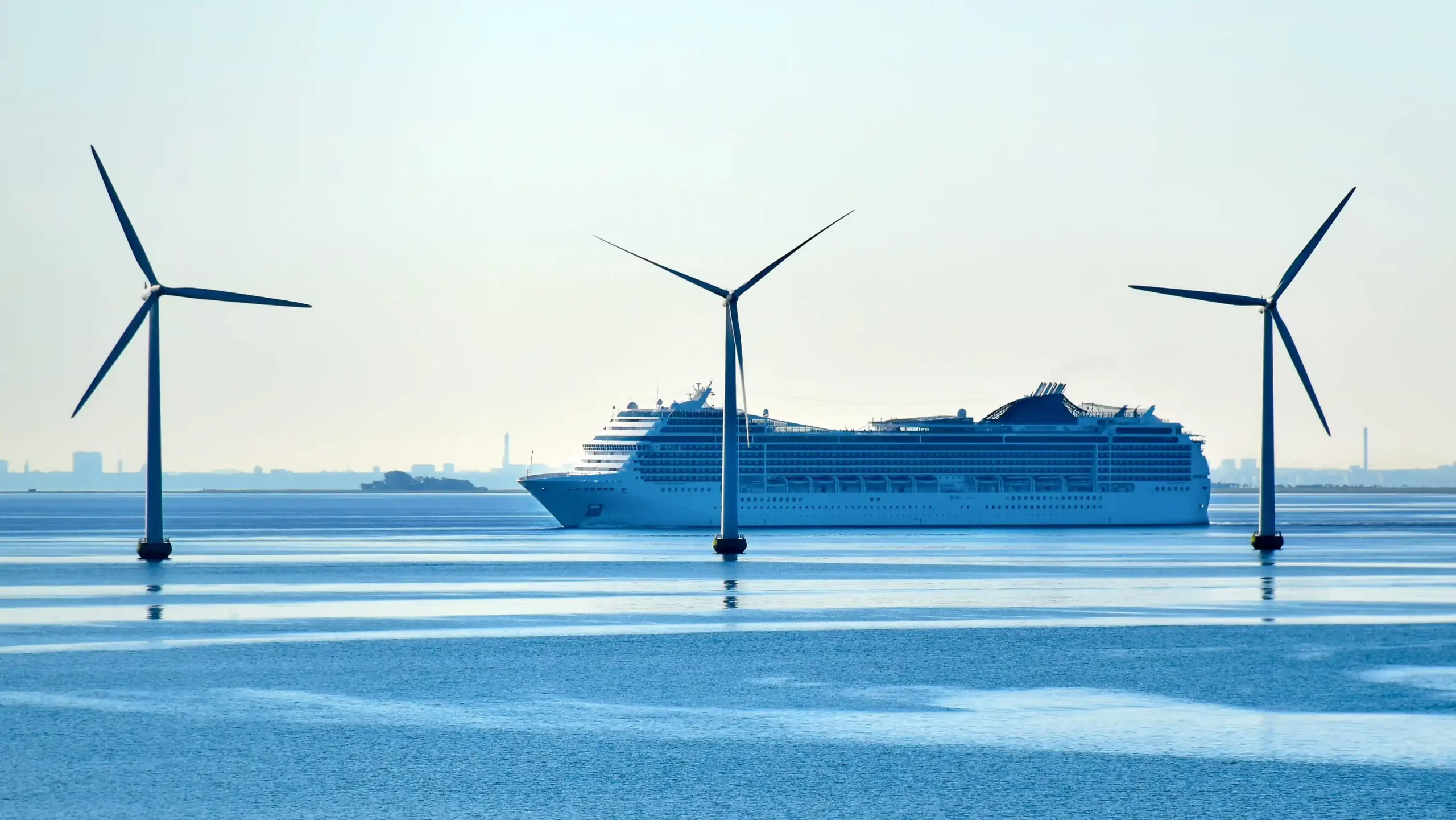
Effective utilization of ocean space, especially development of transportation systems, utilization of artificial land space on the sea and sustainable marine resources development, is an important challenge.
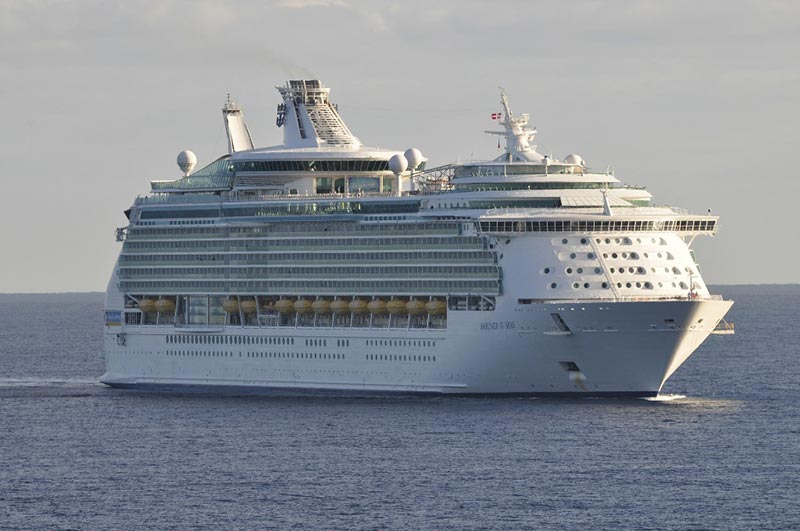
It is imperative to develop new-generation systems that are able to integrate land, coastal and ocean transportation. Coastal transportation systems are viewed as a potential solution for supplementing saturated land transportation. Intelligent access procedures are required for efficiently developed waterfront communities. Planning and construction methods are needed for the utilization of artificial land space on the sea, the construction of infrastructures (offshore floating airports and power plants, etc.) and the facilities for leisure activities (passenger cruise ships, marine leisure complexes, etc.). In addition, the development of peripheral technologies for the exploration and mining of marine resources, such as subsea transportation and machine operation, is in high demand. Amongst other technologies required for ocean development, naval architecture is particularly important.
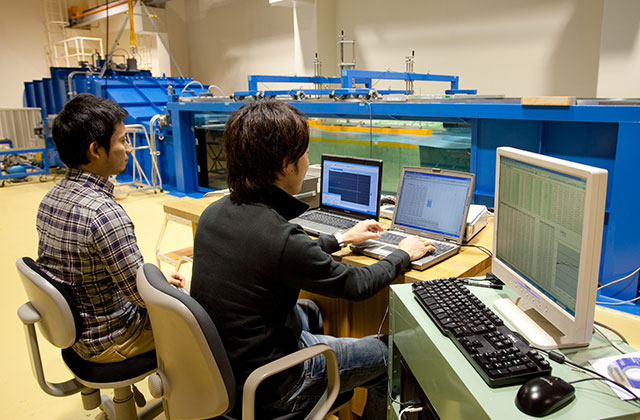
To provide useful solutions for these social demands, the Department of Naval Architecture and Ocean Engineering is offering students the opportunity to study marine utilities and naval architecture, including marine transportation systems, biological and mineral resource development technologies and the planning of ocean spaces. The objectives of our department are to be leaders in the frontiers of marine technologies and naval architecture as well as to educate students to become engineers and researchers with broad vision who can make important contributions in the new age of the marine development industry.
What Do You Learn?
To study the broad range of technologies required for marine technologies and naval architecture, students must acquire fundamental engineering knowledge as well as organizational skills based on a wider vision than simply marine technologies and naval architecture. This course of study combines structural, fluid, heat, materials, and control engineering in a curriculum designed to develop system engineering skills which can be practically applied in the design or construction of ships, and marine and offshore structures. In addition, lectures and seminars related to numerical skills, e.g. computer programming languages, numerical analyses and simulations, are provided as these numerical skills have an important role in the design and production of marine technologies.
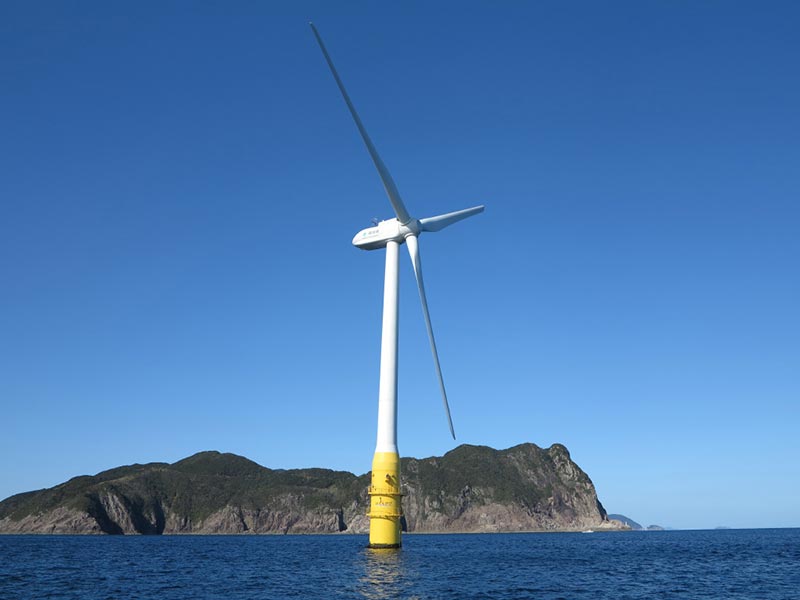
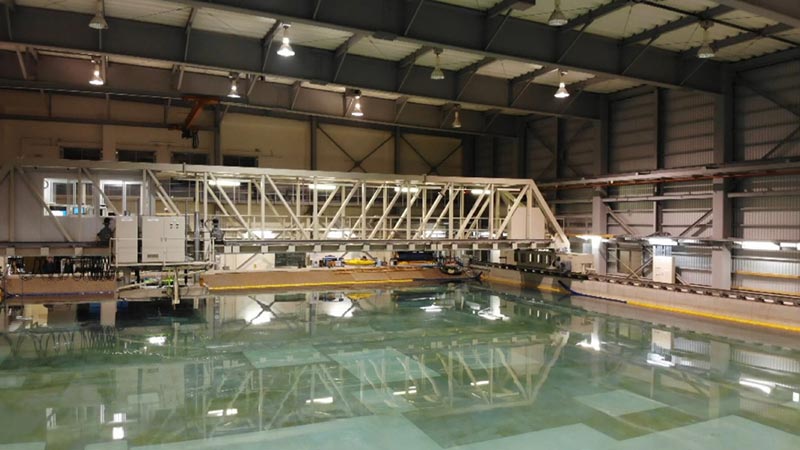
This course of study consists of the following seven areas of education and research: 1) Planning of Marine Systems, 2) Marine Hydrodynamics, 3) Marine Dynamics and Control, 4) Functional Design of Marine Systems, 5) Structural Design of Marine Systems, 6) Fatigue, Fracture, Welding mechanics and Production Systems, 7) Ship Design and Maritime Intelligent Technology, 8) Ocean Energy Resources.
Introduction Movie
Voices of Seniors
Department Policy
-
Educational Philosophy and Aims
The objective of the School of Engineering is to develop expert technicians and researchers to fulfill the responsibilities of engineering to society. Because of the wide-ranging effects of engineers on society, engineers not only require special knowledge in their respective fields, but also an understanding of ethics in engineering, a profound cognizance and perception of humanity, and a broad education about the environment and the role of human beings within it. To participate in international society it is necessary to realize and understand the multiplicity of cultures, and to respect other people’s beliefs and ideas. It is also important for engineers to hone communication skills in order to acquire practical and technical proficiency, and to cultivate logical thinking ability, planning skills, perseverance, leadership ability, and physical strength.
In keeping with this view of engineering’s responsibility to society as a whole, the Kyushu School of Engineering programs include both compulsory and elective courses which strive to educate our engineers to become leaders in their fields. Our students are expected to acquire the following during their four-year program:
- Basic knowledge of mathematics and natural science necessary to be a technician in each area of expertise
- A desire to continue lifelong studies, and to keep pace with future changes in each area of expertise
- Management skills as a technical leader in each area of expertise
- Ability to implement science and technology while considering the effects on the economy, society, and the environment
- Ability to understand the role of technology and realize an engineer’s responsibilities to society
- Communication and presentation skills in Japanese and other languages
- Ability to comprehend and respect other people’s opinions and ideas, and to communicate own ideas and opinions
- Wide point of view to realize the multiplicity of cultures and understand and respect other people’s beliefs and ideas
- Wide knowledge of human nature and society, the global environment, and technology
- Basic physical strength necessary to act as an engineer or researcher
Engineering and technology will continue to assume an increasingly greater role in the world. It is our hope that our students will gain a wide range of knowledge and skills in becoming engineers who proudly carry the responsibility and commitment of working towards the betterment of society.