
Department Overview
[Civil engineers works towards building sustainable and prosperous cities and nations]
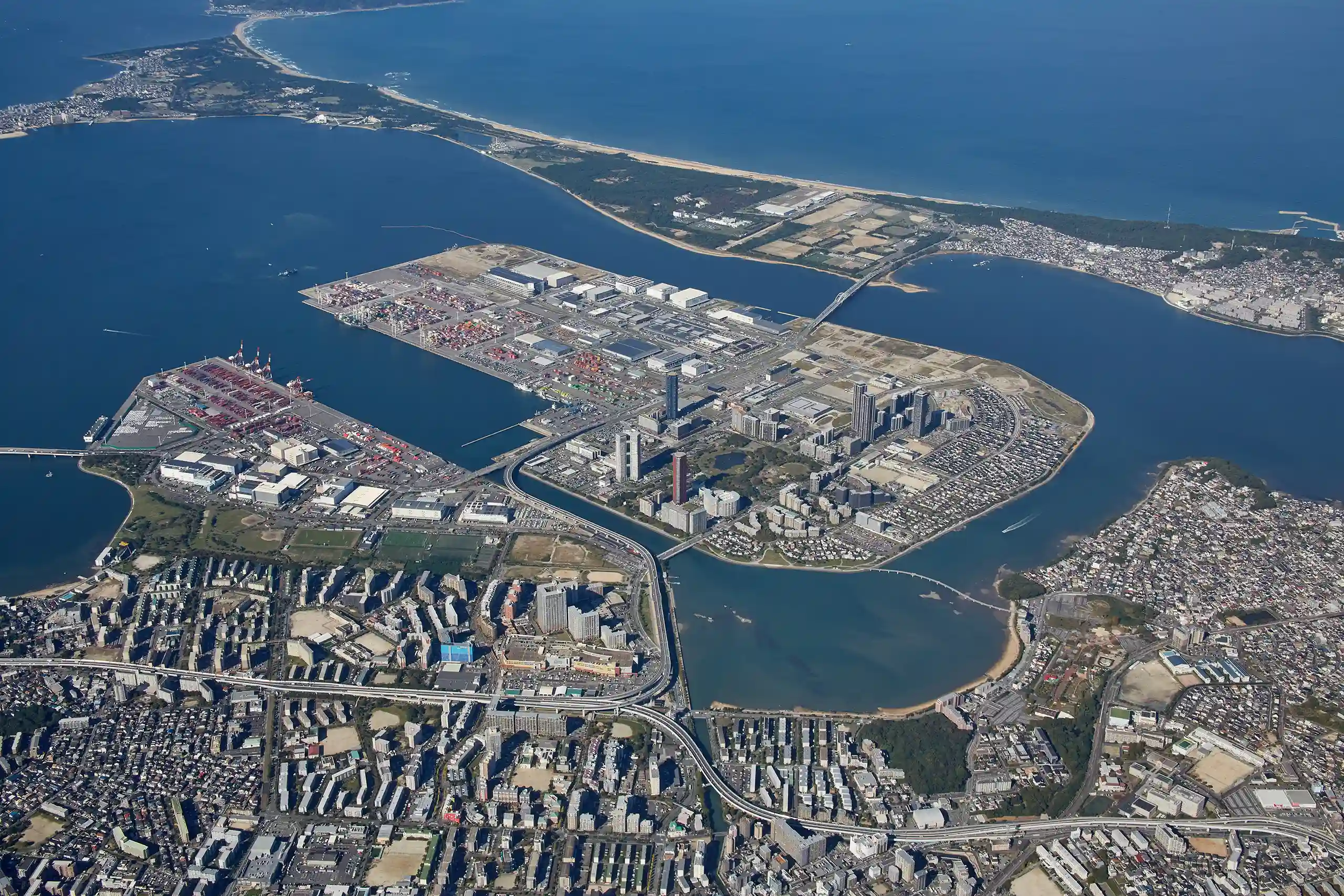
Civil engineering is a broad discipline encompassing the development and conservation of a nation’s infrastructure (roads, rivers, coasts, mountains and forests, etc.) necessary for us to lead safe, secure and prosperous lives. Civil engineering also covers development of disaster prevention technologies, and green infrastructures that aim to harmonize the artificial cities with the nature and ecosystems, next-generation transportation services combining big data, and new materials for building durable structures.
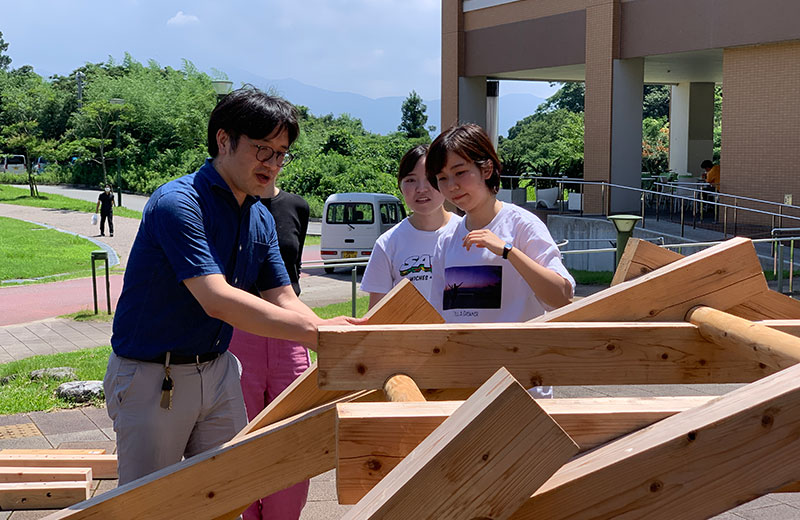
Technologies in the Civil engineering date back to the history of mankind. Roads, bridges, water and sewage systems, railroads, ports, and other infrastructures make up our modern society. The world is now facing severe environmental, social, and economic problems. While inheriting and developing traditional technologies, civil engineering also incorporates State-of-the-art technologies (AI, automatic driving, 5G, etc.) to build sustainable and prosperous cities and nations for the next 50 years, 100 years, and beyond.
In this rapidly changing world, civil engineers, who can combine various technologies and ideas to enrich the lives of citizens in their respective regions, are absolutely needed all over the world.


What Do You Learn?
In the Department of Civil Engineering, you can acquire not only the basic specialized knowledge and skills, but also the management skills, communication skills, leadership qualities, and ethics so that you can play an active role as civil engineers on the front lines after graduation.
The followings are the main educational goals of our program.
- To acquire a broad knowledge of the global environment and human society, and to become a person with an excellent personality backed by a sense of ethics.
- To acquire the necessary knowledge and communication skills to be an independent engineer who can respond appropriately in today’s globalized world .
- To nurture civil engineers who can take leading role in infrastructure development, and to acquire the basic academic skills and advanced applied academic skills required for a wide range of jobs.
- To acquire the management skills for carrying out practical work systematically and efficiently under the given constraints.
- To acquire the design ability for creating a better society, by integrating specialized knowledge and intelligence.
- To be able to take the leadership in society.
- To acquire an aptitude for solving fundamental issues for sustainable development, such as cross-disciplinary global environmental problems and disaster prevention.
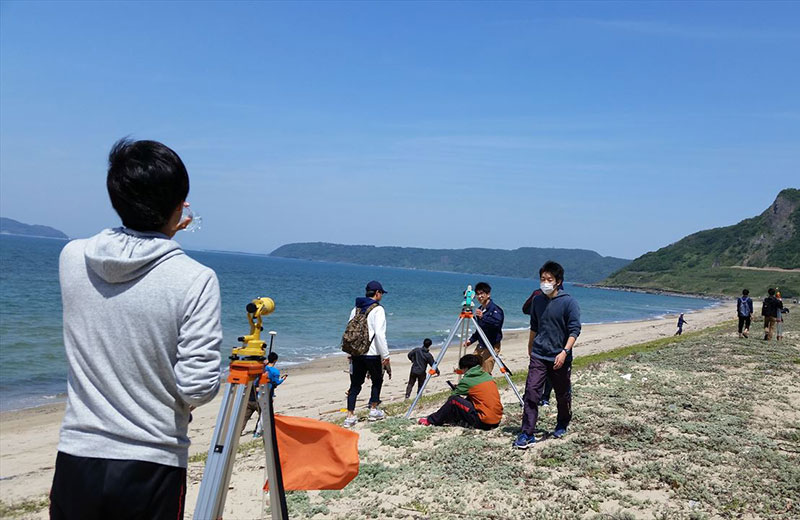
Introduction Movie
Voices of Seniors
Department Policy
-
Educational Philosophy and Aims
The objective of the School of Engineering is to develop expert technicians and researchers to fulfill the responsibilities of engineering to society. Because of the wide-ranging effects of engineers on society, engineers not only require special knowledge in their respective fields, but also an understanding of ethics in engineering, a profound cognizance and perception of humanity, and a broad education about the environment and the role of human beings within it. To participate in international society it is necessary to realize and understand the multiplicity of cultures, and to respect other people’s beliefs and ideas. It is also important for engineers to hone communication skills in order to acquire practical and technical proficiency, and to cultivate logical thinking ability, planning skills, perseverance, leadership ability, and physical strength.
In keeping with this view of engineering’s responsibility to society as a whole, the Kyushu School of Engineering programs include both compulsory and elective courses which strive to educate our engineers to become leaders in their fields. Our students are expected to acquire the following during their four-year program:
- Basic knowledge of mathematics and natural science necessary to be a technician in each area of expertise
- A desire to continue lifelong studies, and to keep pace with future changes in each area of expertise
- Management skills as a technical leader in each area of expertise
- Ability to implement science and technology while considering the effects on the economy, society, and the environment
- Ability to understand the role of technology and realize an engineer’s responsibilities to society
- Communication and presentation skills in Japanese and other languages
- Ability to comprehend and respect other people’s opinions and ideas, and to communicate own ideas and opinions
- Wide point of view to realize the multiplicity of cultures and understand and respect other people’s beliefs and ideas
- Wide knowledge of human nature and society, the global environment, and technology
- Basic physical strength necessary to act as an engineer or researcher
Engineering and technology will continue to assume an increasingly greater role in the world. It is our hope that our students will gain a wide range of knowledge and skills in becoming engineers who proudly carry the responsibility and commitment of working towards the betterment of society.