
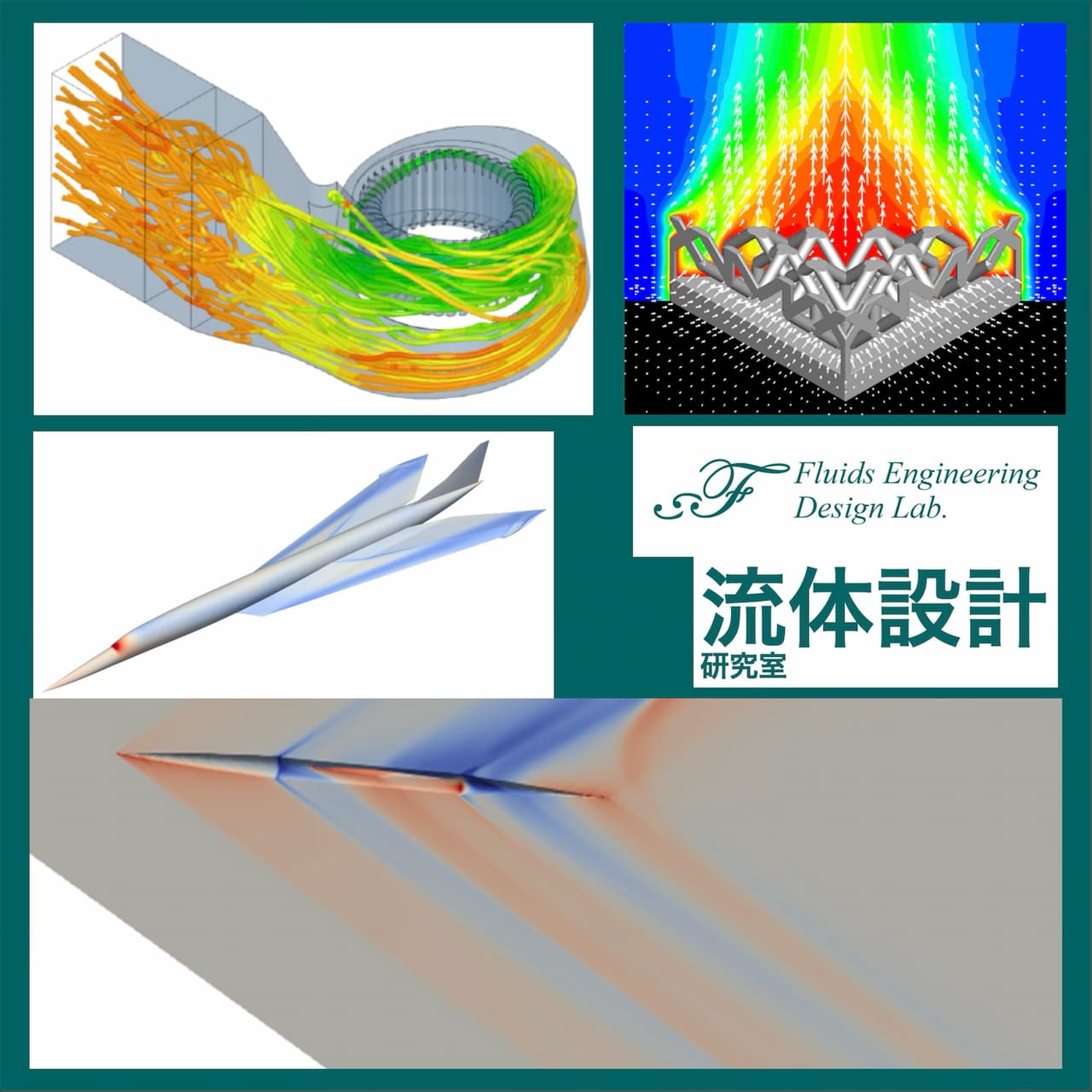
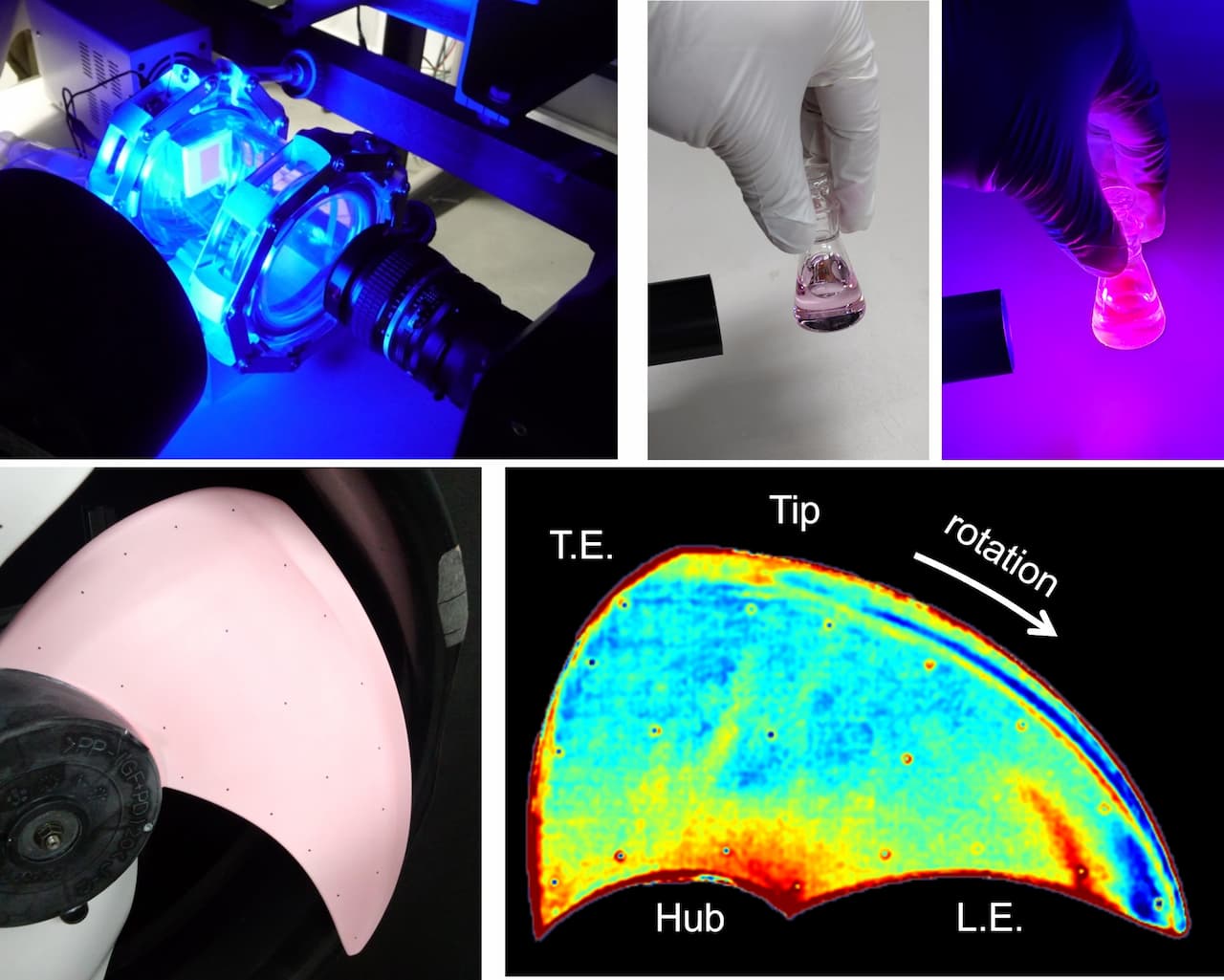
Fluid machinery (e.g., automobiles, aircraft, engines, and power generators) works with force and energy obtained from flow and usually enriches our lives. For fluid machinery design, it is necessary to clarify the flow phenomena that produce force and energy. However, fluid dynamics is a highly complex discipline governed by the “Navier-Stokes equations,” a system of nonlinear partial differential equations. Therefore, this laboratory is conducting research to clarify the flow phenomena (e.g., vortices, shock waves, and acoustics) in detail, which are crucial to the characteristics of fluid machinery, through numerical simulations on supercomputers and optical measurements. Moreover, when designing fluid machinery, it is necessary to consider multiple design candidates and find the most promising one that meets design requirements. However, it is not trivial based solely on the designer’s knowledge, experience, and intuition. Therefore, this laboratory is conducting research to predict flow phenomena in unknown design candidates using existing design data and to quickly develop innovative fluid machinery using mathematical and data-scientific techniques. Through the research mentioned above, this laboratory aims to contribute to the design and manufacture of various engineering machinery, including fluid machinery.
Member
The Main Research Topics
Data-driven and data-informed approaches for fluids engineering analysis and design
Development and application of flow visualization/ measurement techniques
Numerical analysis and control of aerodynamic noise