

The Thermal Physics Engineering Laboratory conducts experimental research to elucidate phenomena associated with heat transfer and thermal energy conversion, along with their engineering applications.
In recent years, increasing attention has been directed toward the efficient use of energy, particularly the effective recovery and utilization of the substantial quantities of waste heat discharged into the environment.
As a result, efforts are underway to develop thermoelectric materials—capable of converting thermal energy into electrical energy—with enhanced environmental adaptability. By applying high-pressure strain to these materials, it is possible to induce metastable phases that exhibit properties distinct from those of conventional stable structures. When combined with established techniques such as nanostructuring and alloying, this approach aims to significantly improve thermoelectric performance.
We also investigate heat transfer mechanisms involving liquid-vapor phase changes, such as boiling and condensation, which facilitate the efficient transfer of large amounts of energy due to the latent heat of vaporization.
These mechanisms find widespread application, ranging from rapid cooling in steel plate manufacturing to thermal management systems in various electronic devices, including smartphones, computers, and power electronics
Our laboratory is particularly focused on advancing phase-change heat transfer technologies, with an emphasis on optimizing the performance of cooling techniques such as spray cooling.
Member
The Main Research Topics
Investigation of structural control and thermophysical properties through the application of high-pressure strain.
Research on spray cooling techniques for the enhancement of steel plate cooling processes.
Study of the evaporation dynamics of microdroplets upon impact with high-temperature solid surfaces.
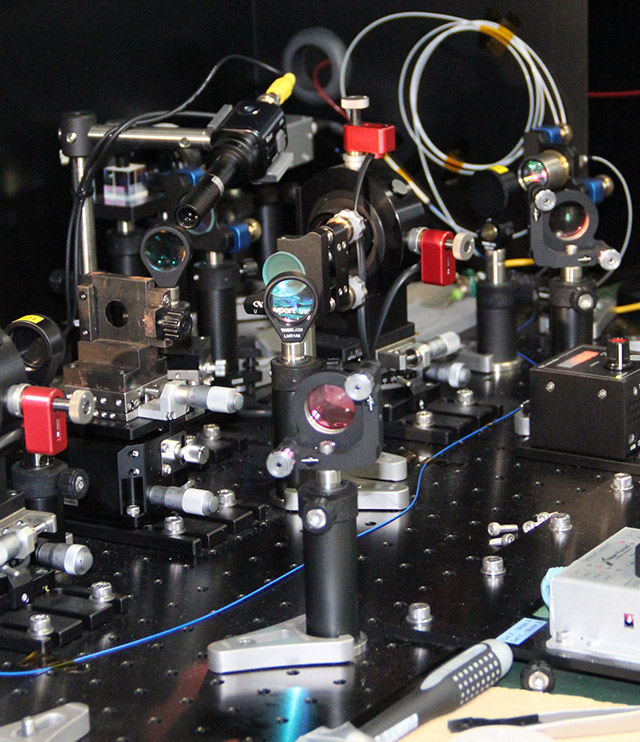
Measurement of thermal properties using the time-domain thermoreflectance (TDTR) method.